A New Artscape
Outdoor sculptures add beauty to Oakland’s campus
Community Engagement
 March 26, 2026
 By Emily Morris // Archival Article by Jay Jackson
Tudor-revival architecture, grassy fields from farmland and modern, structural art: These perspectives can be worlds apart, but thoughtful curation to establish Oakland University as a community focal point weave these styles throughout campus, turning heads regardless of preference. Acquiring OU’s first large-scale outdoor sculpture, “Saints and Sinners,” in 1976 was a launching point for exponential artist focus throughout the next decades.
Kiichi Usui (1931-2001) was the curator of Oakland University’s Meadow Brook Art Gallery from 1967 to 1997 and led Oakland University through its first community outdoor sculpture competition in 1981, which added six prominent pieces on campus: “Sunset Cube,” “Day Star,” “Rhythm and Variation,” “Telegraph Exchange,” “Untitled” by Mel Leiserowitz and “Untitled” by Tom Bills. The Meadow Brook Invitational: Outdoor Sculpture Competition serves as a cornerstone in campus and community collaboration, with the largest permanent art installment to date.
 |
|---|
|
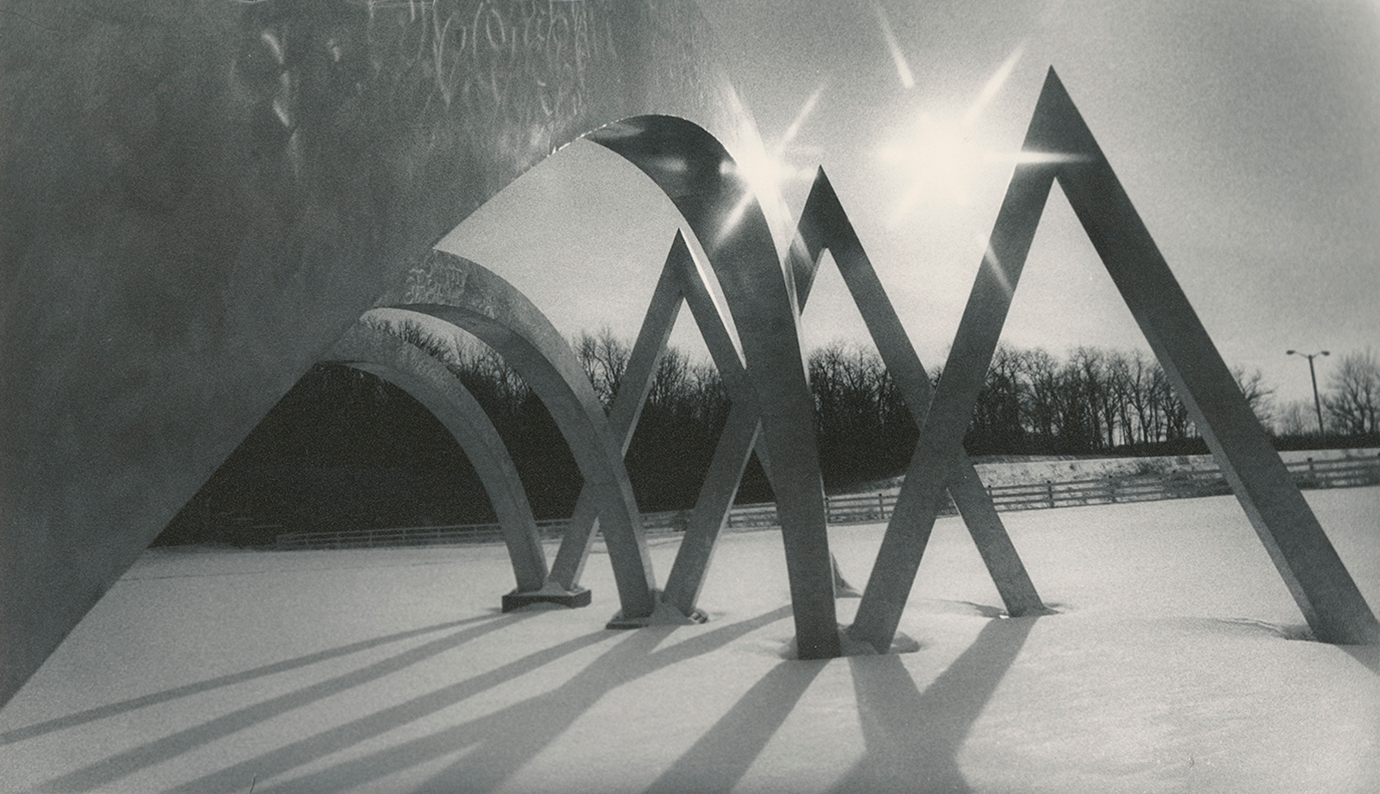
“Rhythm and Vibrations” - Hanna Stiebel, 1981 |
This year, Oakland University begins its next chapter in outdoor artistic development with the Spirit of Place Public Arts Competition. Funded by a $250,000 gift from President Ora Hirsch Pescovitz, M.D., and a $100,000 university match, the competition will be national in scope, culminating in the installation of a permanent, large-scale artwork that reflects Oakland’s mission, values and aspirations.
While anticipating a new generation of artistic vision, there’s also an opportunity to nod to the visuals and values from past installments that OU continues to build upon. The below article from the 1993 Alumni Magazine celebrates the artists who came together to curate campus in 1981.
Fall Alumni Magazine 1993
 |
|---|
|
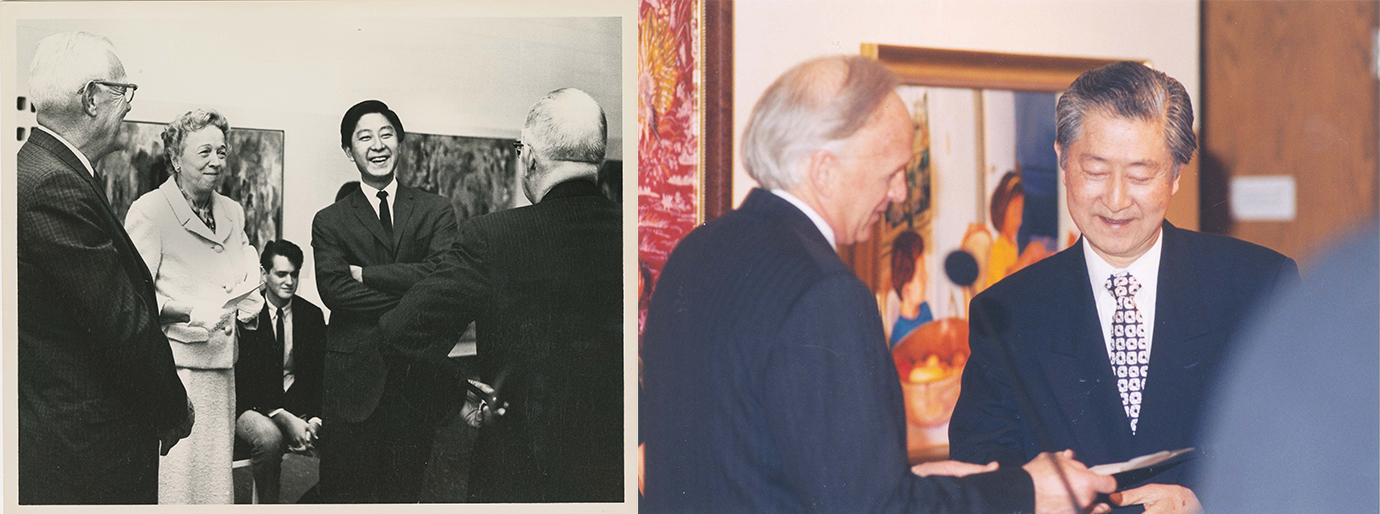
Kiichi Usui at the beginning of his career and at his retirement party |
Kiichi Usui is the curator of one of the largest art galleries around — literally.
Stand virtually anywhere on the Oakland University campus, and there’s the gallery around you.
Although he’s well known for developing the Meadow Brook Art Gallery inside Wilson Hall, Usui’s reputation for being a driving force behind the outdoor sculptures on campus may be lesser known.
The modern art sculptures, some of which are the size of small buildings (one is 24 feet tall and 42 feet wide), resulted from efforts by Usui and gallery supporters to turn the 1,444-acre campus into an outdoor treasure trove. Their efforts have paid off with 10 modern art pieces. The campus is also home to two other outdoor sculptures of a more traditional style.
The impetus for the ongoing project was Louis G. Redstone, a noted Detroit architect, who in 1980 suggested that Oakland sponsor the Meadow Brook lnvitational: Outdoor Sculpture Competition. Six sculptors were eventually chosen for their originality and dramatic viewpoints, and their pieces were placed on campus in 1981. Since then, private donors have contributed additional pieces to the university. Two more were added this year.
“The sculptures not only give an accent to the landscape, but they also give the general public something to think about; to think about what contemporary public sculptures are. I think that it is very important to let people know — in contemporary sculpture — what artists do in their work,” Usui says.
 |
|---|
|
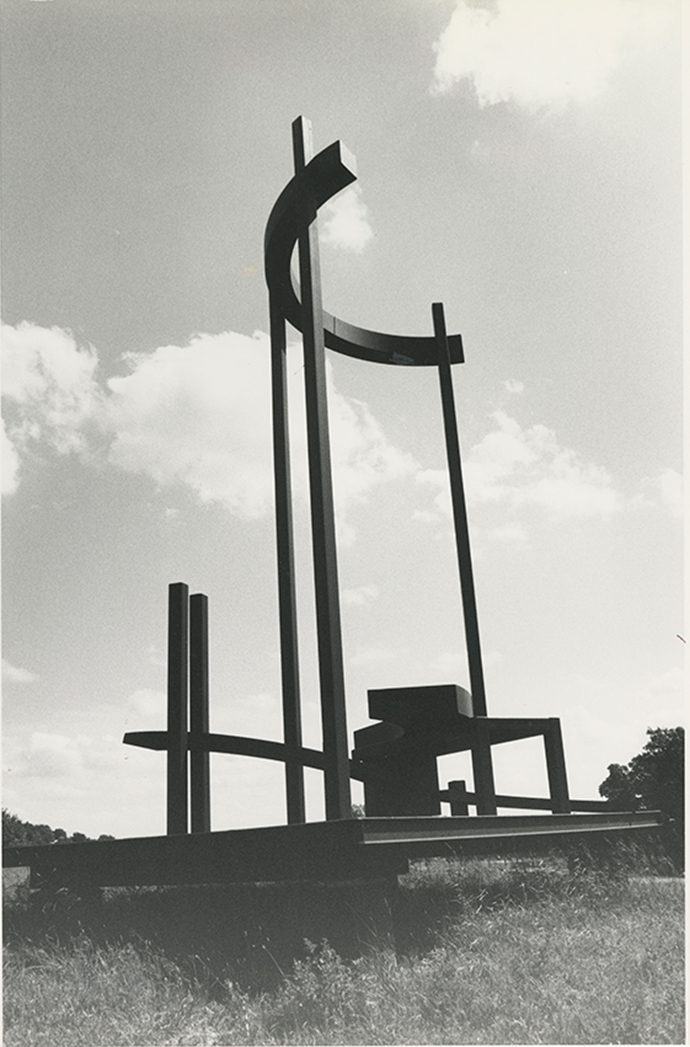
“Telegraph Exchange, Midwest Sweep Series” - John F. Piet, 1981 |
“Without the sculptures, the campus would still be beautiful, but certainly those sculptures make a visual statement.”
It’s not uncommon to see motorists pull off the road and walk up to signs that describe each work. Then they walk around and study the sculptures from all angles, from near and far. Some may dislike them; others may love them. To Usui, that is what art should do — draw a reaction.
“The artists chose the locations for their work,” Usui says. The placement of each piece depended in part on its size, with the larger sculptures often in meadows where they can be observed from a distance. Smaller ones can be found near classroom buildings. “To me, that means art fits just right; it’s comfortable,” Usui says.
All of the sculptures have been donated to the university. During the year when the competition was held, Usui says, community enthusiasm and support for the artists was evident. “All pieces were created by donation of materials and services to the artists,” he says. “Many companies were willing to provide material and technical assistance.”
Also lending support were the National Endowment for the Arts, the Michigan Council for the Arts and the Institute of Museum Studies.
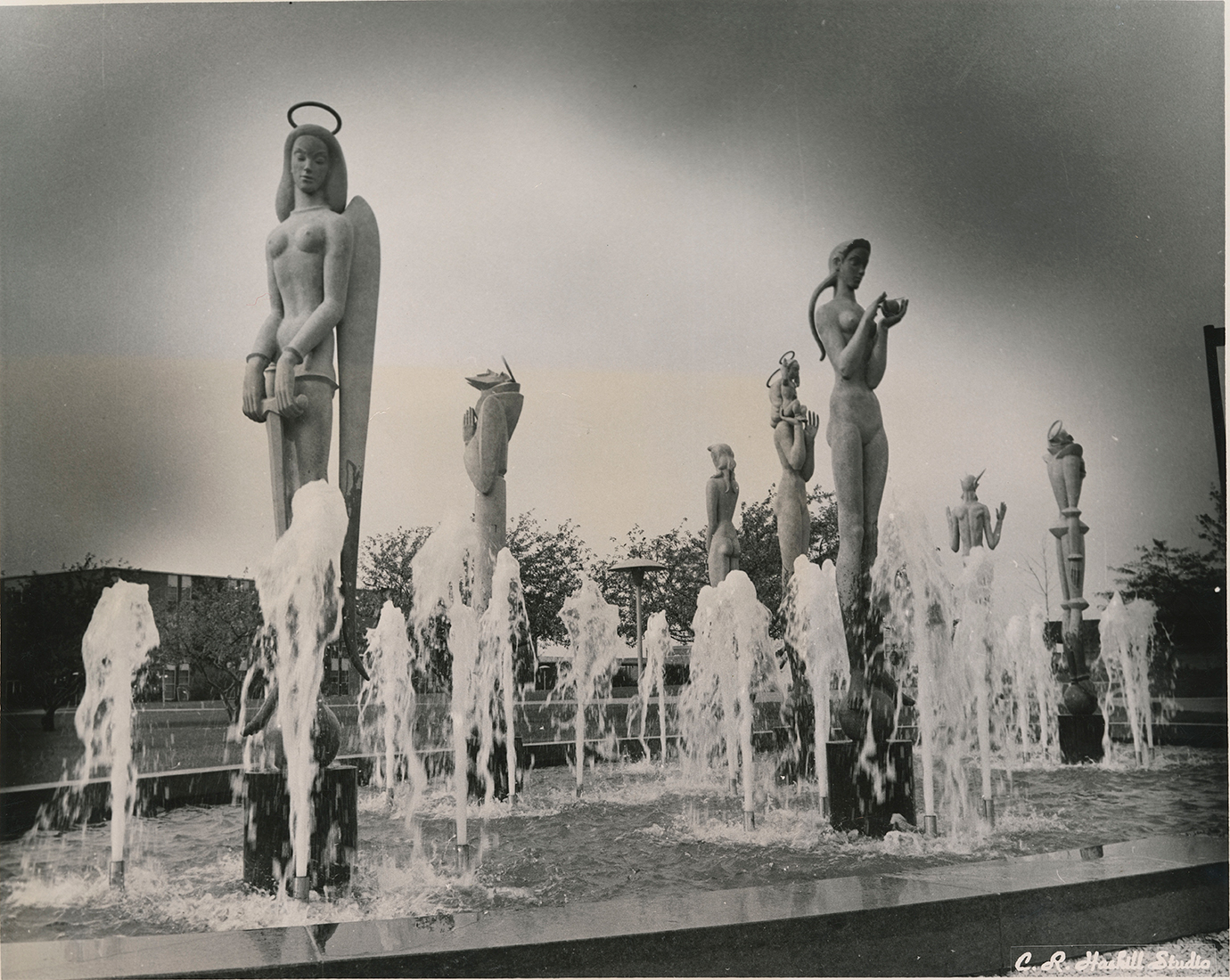 |
|---|
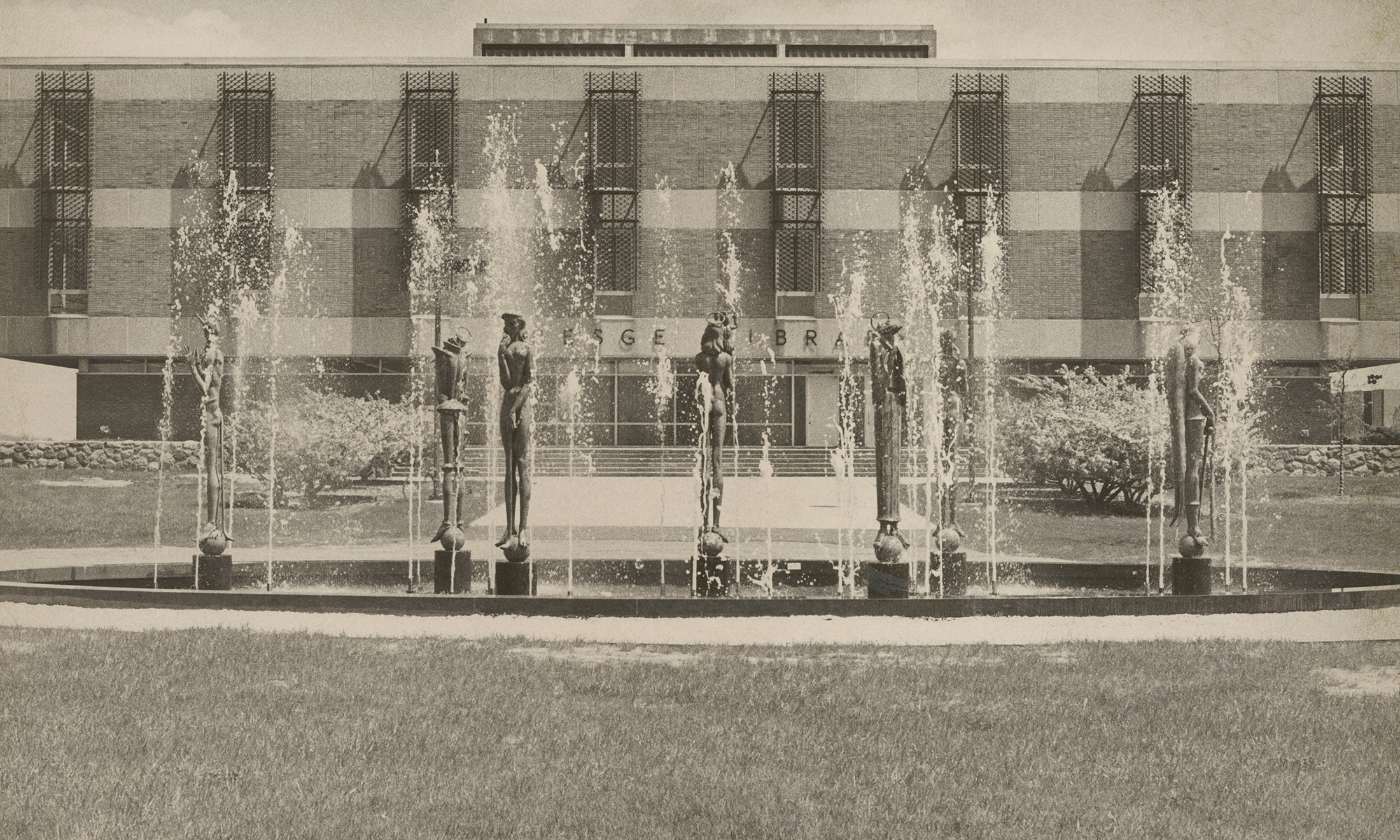
| “Saints and Sinners” - Marshall Fredericks, 1976 Coming before Usui’s defining competition, this was the university’s first major art piece. |
What impresses Usui about the sculptures is that they bring an element of the 1980s and 1990s to campus. And two of Oakland’s sculptures — “Saints and Sinners” in front of Kresge Library by Marshall M. Fredericks and “Pegasus” by Avad Fairbanks at Meadow Brook Hall — represent the classical approach that predates the university.
While the cultural value of the sculptures to the university is immense, there is also a dollar value. Usui estimates that if someone wanted to buy all the outdoor art — sorry, it’s not for sale — the bidding would start in the hundreds of thousands of dollars.
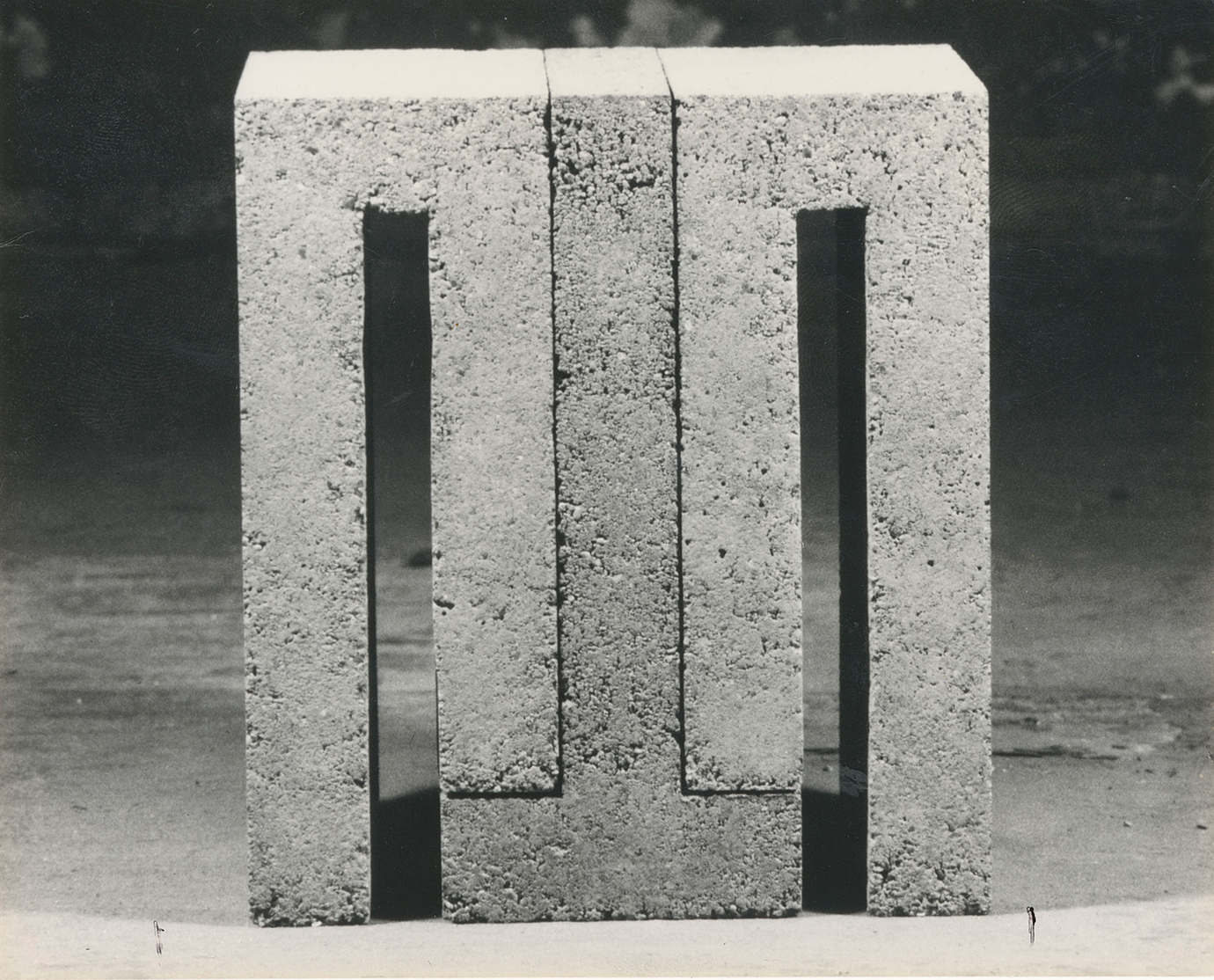 |
|---|
| “Untitled” - Tom Bills, 1981 “This is an example of minimalism, or the maximalism reduction process of modern art,” Usui says. |
Of the original six sculptors, Usui says Tom Bills probably has the most widespread reputation among art devotees. And he doesn't say that because Bills (’74) is an Oakland alumnus either. Now represented by several galleries and working from a New York studio, Bills continues to produce intriguing pieces. His “Untitled” work at Oakland consists of concrete cubes on the lawn of Sunset Terrace, the university president’s residence.
Usui tells a story about a European collector who visited Bills’ studio. He looked over 24 pieces and made his purchase — all of them.
“He is recognized as the next generation of American sculptor,” Usui says. Usui knew Bills well from the sculptor’s Oakland days. Bills was a student assistant in the gallery for three years.
“While he was working with me, he started as a sculptor, then he went on to Yale University and got his Master of Fine Arts degree. Since then he has had shows in New York and Europe.”
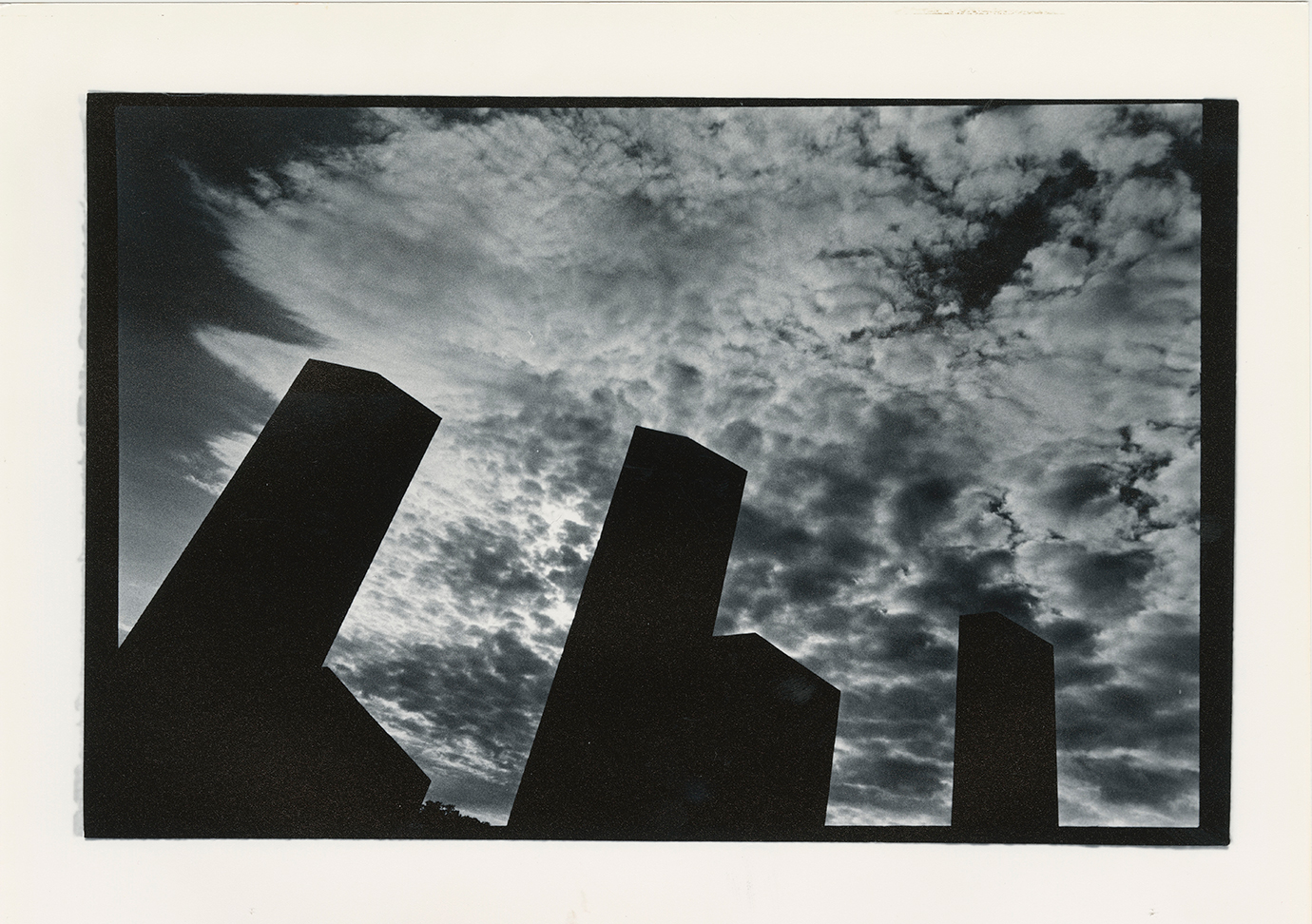 |
|---|
| “Sunset Cube” - David Barr, 1981 “His idea was that from a distance, the pieces would form a giant cube,” Usui explains. “It’s sliced very sharply at the top, and that’s to indicate it’s growing out of the earth.” |
In Michigan alone, Usui adds, sculptor David Barr is best known among those who have pieces on campus. He created “Sunset Cube,” a series of yellow steel columns, also near Sunset Terrace, and “Structurist No. 11,” one of the two most recent additions that has been placed adjacent to North Foundation Hall.
Usui acknowledges that some people make fun of the sculptures, but he adds that proves that successful art draws opinions, both good and bad. In other words, sometimes it’s better to be snickered at than ignored.
More Like This: |